Put Visitor Access In The Right Hands
A door entry system lets a visitor call a person inside before the entrance is released. It is useful when reception cannot see the door, when an office is shared by several businesses, or when staff need to admit deliveries without leaving their work area.
The first question is who should answer. A central reception desk needs different call handling from a small office where staff move between rooms. We consider daily staffing patterns, delivery times and arrangements for a missed call before recommending audio, video or an app based option.
Audio, Video Or IP Door Entry
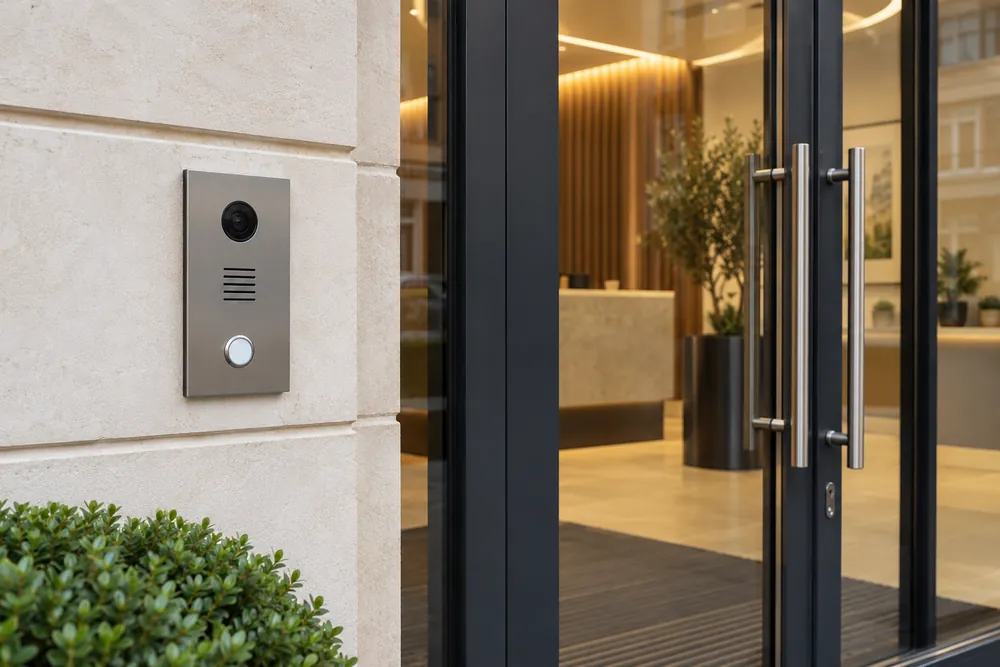
An audio intercom can be sufficient where a conversation provides the information needed to admit a visitor. Video adds a view of the entrance, which can help with unfamiliar callers and busy reception areas. Camera position, lighting and the height of different users matter more than a decorative screen.
IP systems use network connections and may route calls to internal stations or authorised mobile devices. Confirm network ownership, remote access controls and any recurring licences before committing. A mobile notification is useful only if someone is responsible for answering and has a suitable connection.
Accessibility And The Entrance Layout
Consider the route to the entrance as well as the intercom panel. A visitor should be able to identify the call point, reach its controls and understand whether a call has connected. Talk about hearing support, visual indications, lighting and the needs of wheelchair users during the survey.
The Equality Act 2010 includes duties relating to reasonable adjustments for disabled people. The right arrangement depends on the service and premises, so discuss access requirements with your facilities and accessibility advisers. Do not assume that fitting a video panel alone resolves every barrier.
At a Doncaster office or shared entrance, controlled doors must still allow escape in line with the building’s fire safety arrangements. GOV.UK guidance on workplace fire safety requires emergency exits to remain clear and easy to open. Agree any fire alarm interface and local emergency release with the responsible person before changes are made.
A Practical Installation Process
Start by describing the entrance and the people who receive visitors. Include reception opening times, the number of occupiers, expected delivery arrangements and whether the entrance is exposed to rain or direct sunlight. A shared entrance also needs an agreed way to maintain the directory.
The survey checks the door, lock, closer, cable routes, power and network. An existing intercom cable may be reusable, but its condition and suitability must be tested. The design should set out the call destinations, release permissions and what users see or hear when a call is unanswered.
During commissioning, test speech and video with the door both open and closed. Check call transfer, release timing and recovery after a network or power interruption. Reception staff should practise the normal process and know how to handle a caller who cannot use the panel.
How Door Entry Choices Affect Your Quote
A simple entrance calling one desk is different from a multi-tenant system with several call destinations. Video stations, network work, external cabling, door repairs and new locking hardware all influence the installation scope. Access equipment or working around public opening hours can also affect planning.
Ask for separate figures for installation and continuing licences or service plans. Confirm whether mobile calling is included and how much it costs to add an answering device. Record the ongoing responsibility for managing user accounts, updating software and changing the visitor directory.
Privacy And Everyday Use
If the system records identifiable visitors, UK data protection requirements need consideration. A live view and stored recordings create different questions about purpose, access and retention. Keep the proposed features proportionate to the entrance problem you are trying to solve.
Give staff a simple visitor procedure. Speaking to a caller is not a substitute for checking that they are expected, and remotely releasing a door can admit someone standing behind them. Where tailgating is a concern, combine door entry with an appropriate reception process and physical layout.
For staff who need regular entry, a linked access control system may be more convenient than calling reception each time. We can discuss the relationship between intercom calls, staff credentials and CCTV without assuming every entrance needs every available feature.
Useful Technical Guidance
For the guidance behind these considerations, see Equality Act Guidance, Workplace Fire Safety. The applicable requirements should be confirmed for your specific premises.
Door Entry Systems: Your Questions
Can Door Entry Calls Go To A Mobile?
Door entry calls can be sent to authorised mobiles on suitable IP or cloud based systems. Check connectivity, subscription terms and who will answer during absences before choosing this option. Ask for a demonstration of call handling and door release, plus an agreed fallback if the connection is unavailable.
Can A Shared Building Have Separate Call Buttons?
A shared building can have separate call buttons or a directory routing visitors to different occupiers. The design needs agreement on call destinations, naming, permissions and who manages changes. Existing cable routes and the entrance panel size may limit the options, so arrange a survey before choosing equipment.