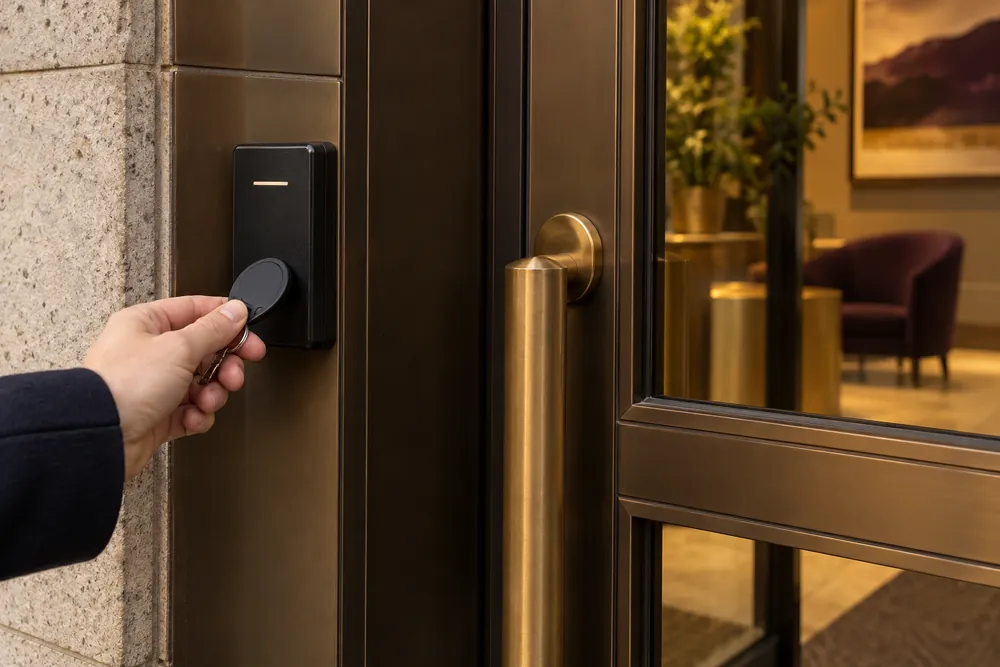
A Better Way To Manage Your Doors
Keys become difficult to manage when staff change, contractors visit and different teams share a building. Electronic access control gives each authorised person a credential and sets the doors and times they can use. A lost fob can be removed from the system without replacing every lock.
For an office, that might mean a shared reception entrance and restricted records room. A factory may need separate permissions for production, stores and plant areas. We start with these decisions, rather than asking you to choose a reader from a catalogue.
Choose The Right Type Of System
A standalone controller can suit a single door where permissions rarely change. A networked system lets an authorised administrator manage multiple doors from one place. A cloud managed option can be useful across buildings, but needs a clear discussion about connectivity, subscription costs, account security and who retains control of the data.
Credentials can include fobs, cards or mobile devices. The practical choice depends on gloves, working conditions, visitor arrangements and the risk of credentials being shared. Ask for a demonstration of adding a user, cancelling a lost credential and producing a relevant access report before accepting a proposal.
Door Hardware And Safe Escape
The lock is only part of the entrance. Door alignment, hinges, closers, cabling, power supplies and release devices all affect whether the system works reliably. An attractive reader cannot compensate for a door that fails to close or a latch that does not engage.
Access restrictions must be considered alongside the fire risk assessment and escape arrangements. The Regulatory Reform (Fire Safety) Order 2005 applies to relevant commercial and other relevant premises in England and Wales. Your responsible person and fire safety adviser should agree how controlled escape doors release, including emergency and power failure conditions.
BS EN 60839-11-1 covers electronic access control system and component requirements. NSI also publishes NCP 109 for access control work. The specification should identify the applicable standards and the actual installer’s scope of certification where this is required, rather than treating a standard number as proof of approval.
From Door Schedule To Handover
First, list each controlled door, the groups that use it and any opening hours. Include cleaners, deliveries, temporary staff and visitors. Tell us which doors are on escape routes and whether your landlord has restrictions on alterations.
Next, survey the existing doors, containment, electrical supplies and network routes. Agree a door schedule showing each reader, lock, release method and behaviour during a fault. Integration with door entry, CCTV or an intruder alarm should have a stated purpose and an agreed test.
Installation is then planned around your operating hours. At commissioning, test authorised and denied access, door held alerts, emergency release and recovery after power interruption. Handover should include administrator training, drawings, credentials, warranty terms and a clear route for reporting faults.
What Affects Access Control Costs
The number of doors is only the starting point. Existing door condition, lock type, cable routes, network availability and the distance between buildings can change the work involved. Reusing serviceable hardware may help, but only after compatibility and safety have been checked.
Ask the quote to separate hardware, installation, software licences, recurring charges and maintenance. Identify who owns the administrator account and what happens if you change maintenance provider. A useful comparison considers the cost of operating and changing the system, as well as the first installation.
Keep Permissions Under Control
Allocate an administrator and a deputy who understand the building. Create a joiner and leaver procedure, review access groups when roles change and avoid giving every user unrestricted access just because it is quicker. Temporary permissions should have a planned expiry.
Access logs can contain personal information. Decide why you need those logs, who can view them and how long you need to keep them. Record these choices in your organisation’s data protection arrangements and discuss them with your adviser where necessary.
Useful Technical Guidance
For the guidance behind these considerations, see NSI Access Control Guidance, BSIA Access Control Specifier Guide, Workplace Fire Safety. The applicable requirements should be confirmed for your specific premises.
Access Control Systems: Your Questions
Can Access Control Work On Existing Doors?
Access control can often work on existing commercial doors, but the door and frame must be inspected first. Lock compatibility, closing action, escape hardware and the route for cabling all matter. Share photographs and any door schedule with your enquiry, then have suitability confirmed through a survey before hardware is ordered.
What Happens If An Access Fob Is Lost?
A lost access fob should be disabled by an authorised administrator as soon as it is reported. A replacement credential can then be issued with the appropriate permissions. Confirm the procedure during handover, including how to act outside normal hours and whether an offline door needs a local update.